ashutoshdropshiping@gmail.com
ECG INTERPRETATION ATLAS - FROM BASICS TO EMERGENCY ECGs
By Digitalproducts
Free
By Digitalproducts
Free
ECG interpretation becomes much easier when you have a systematic approach + labeled ECG examples + classic patterns + clinical correlation all in one place.
ECG Interpretation Atlas is a comprehensive visual reference designed to take you from ECG fundamentals to emergency ECG patterns — with every topic presented as a practical 2-page learning spread.
एक ही Atlas में ECG की reading, patterns और clinical approach — सब कुछ.
Instead of giving you pages of theory alone, every topic follows a visual learning format:
A labeled ECG image so you can visually identify the important findings.
Detailed explanation covering:
So you don't just memorize patterns — you learn how to approach them.

Build a strong foundation before moving into abnormal ECGs.
You'll learn:
SOME SAMPLE OF ECG INTERPRETATION
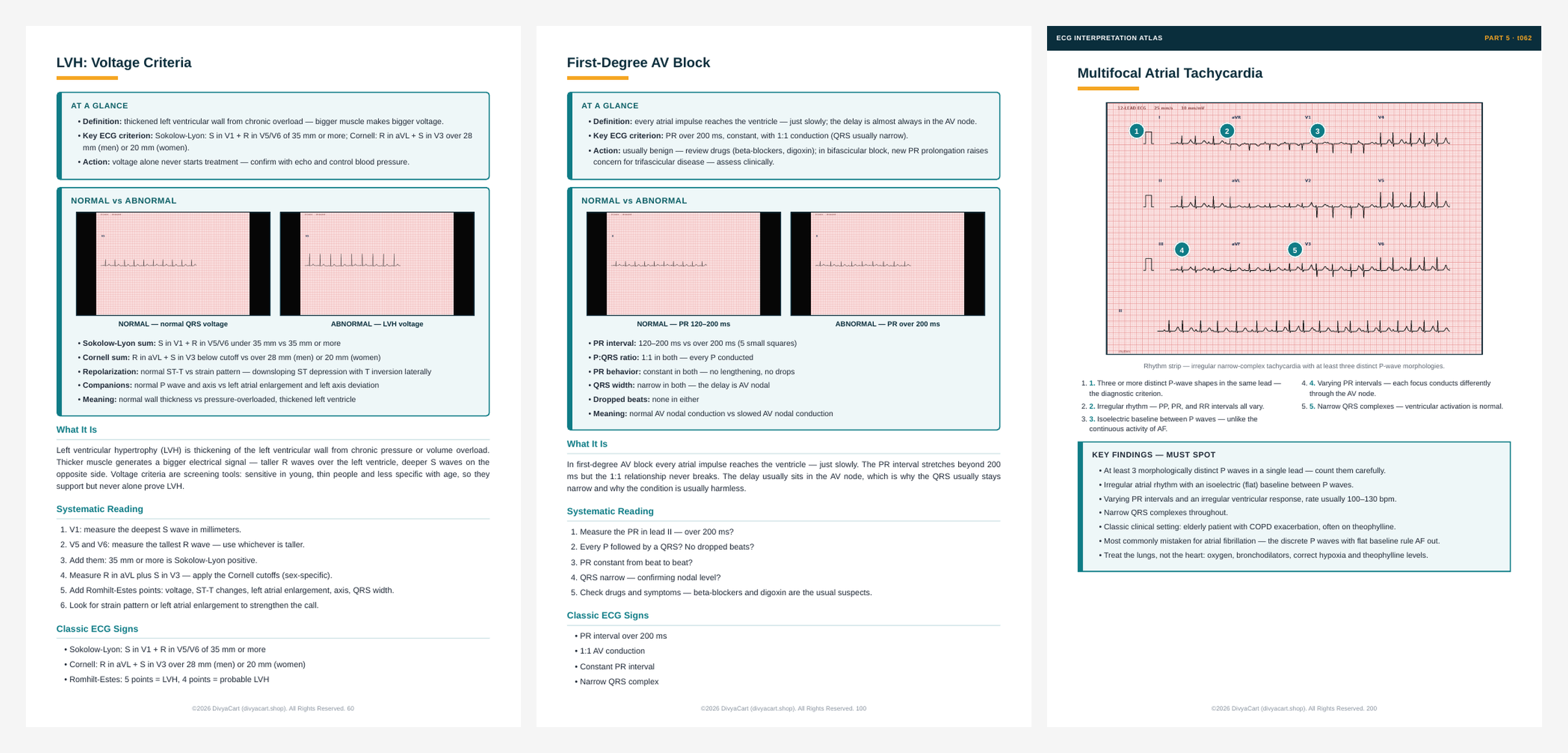
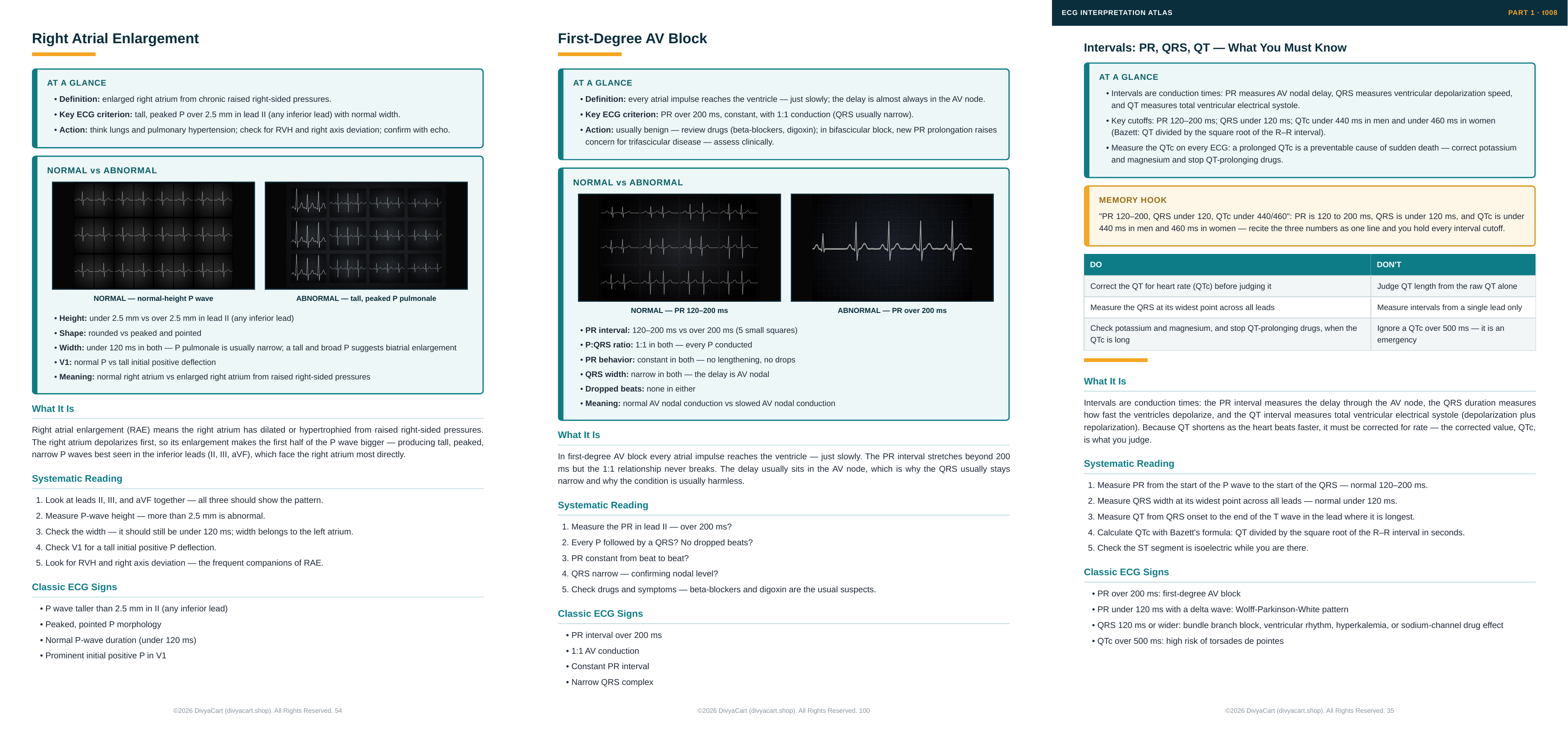
Understand the ECG clues of cardiac chamber enlargement.
Covers:
Visual comparisons make important differences easier to recognize.
One of the most important sections for clinical ECG interpretation.
Includes:
A high-yield section for both clinical practice and examinations.
Covers:
Also:
Learn how to approach both narrow- and wide-complex tachycardias.
Includes:
This section gives you a structured way to approach the pattern.
Covers important slow-rhythm patterns:
Understand the rhythm before jumping to the diagnosis.
Pacemaker rhythms can look confusing at first.
This section covers:
With visual ECG examples to help you recognize the patterns.
Learn how systemic problems and medications can change the ECG.
Includes:
Important patterns that deserve special attention.
Covers:
The Atlas doesn't stop at the 100 core topics.
Perfect for quick oral-exam preparation and reinforcing important concepts.
Revise → Recall → Answer
Each major section gets a concise summary table for quick revision.
Useful when you need to revise:
“बस important points जल्दी से देख लेने हैं.”
Confused by an ECG term?
Use the glossary for quick reference to important terminology.
A dedicated checklist helps you review important emergency-oriented ECG findings and recognize situations that may require urgent clinical assessment.
This resource is educational and should not replace local emergency protocols, specialist consultation, or clinical judgment.
The Atlas contains 130+ unique ECG images, with ECGs used as visual learning examples throughout the topics.
Each core topic follows the visual format:
ECG IMAGE → LABELS → INTERPRETATION → CLINICAL CORRELATION
This makes it easier to connect what you're seeing on the ECG with what it means clinically.
Build a structured foundation in ECG interpretation.
Keep a visual ECG reference handy for pattern review.
Revise high-yield ECG patterns, criteria and differentials.
Understand common ECG patterns and terminology.
Use the viva section, rapid revision tables and exam tips for focused revision.
Especially if you prefer visual examples over pure textbook theory.
You get:
Fundamentals
↓
Chamber Enlargement
↓
Conduction Blocks
↓
Ischemia & Infarction
↓
Tachyarrhythmias
↓
Bradyarrhythmias
↓
Pacemakers
↓
Electrolyte & Drug Effects
↓
Special Situations
Reading ECG theory is one thing.
Recognizing the pattern on an actual ECG is another.
That's why this Atlas focuses heavily on visual interpretation.
You repeatedly see:
Labeled ECG
Detailed interpretation
Classic signs
Differential diagnosis
Clinical correlation
🚨 Red Flag Box
🎯 Exam Tip
Stop treating ECG interpretation as a collection of isolated patterns.
Build a systematic approach, see the ECG, identify the findings and understand the clinical context.
From ECG Fundamentals to Can't-Miss Emergency Patterns
[ DOWNLOAD ECG INTERPRETATION ATLAS ]
ECG पढ़ना सिर्फ याद करने की बात नहीं — सही approach समझना ज़रूरी है.
This eBook is intended for educational and reference purposes for students, healthcare professionals and clinical learners. It is not a substitute for formal medical education, institutional protocols, specialist consultation, or professional clinical judgment. Emergency and treatment decisions should always be based on the patient's clinical condition, current guidelines and appropriate medical supervision.